
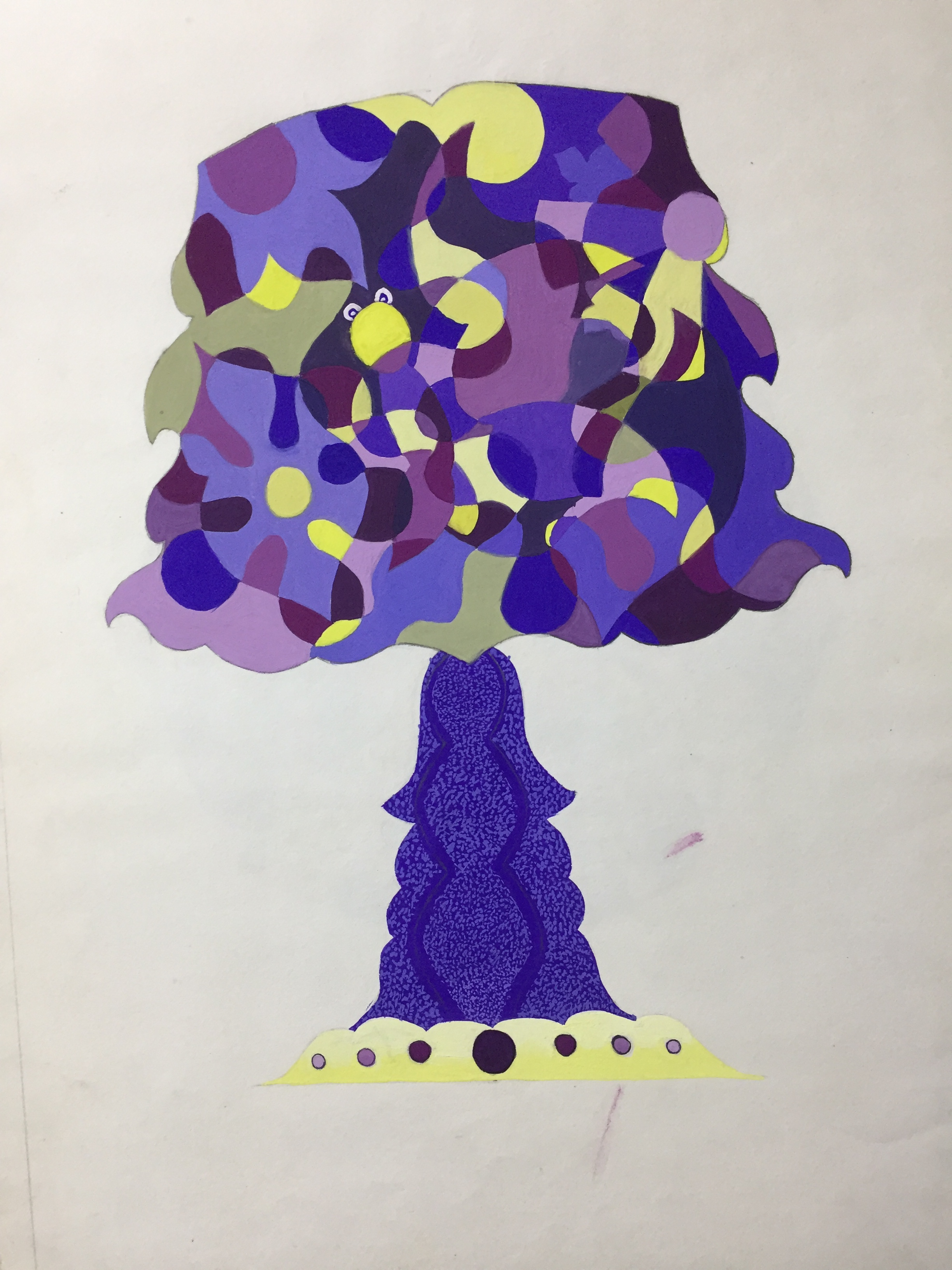
We started off this class by talking about colours. What is a colour and why do we need colour?
Colour is a sensation and we need colour because it makes everything look vibrant and gives it a perspective of beauty.
How do we see colour?
The group of colors that we can see with a prism or in a rainbow is called the color spectrum. These colors always appear in the same order: red, orange, yellow, green, blue, indigo, and violet. When light hits an object, it absorbs all the other colours and reflect one colour and that is what we see as the colour of the object. A ray of light can be split into seven hues.
There are two theories of colour : additive theory and subtractive theory.
Additive theory applies to light. Subtractive theory applies to pigments.
Terms that one should keep in mind while studying colours :
- HUE – Hue is the basic name given to the colour(red, green, yellow).
- VALUE – Value is the intensity or lightness/darkness of a hue.
- TINT – The colours made by adding white to a hue is a tint of that colour.
- SHADE – The colours made by adding black to a hue is its shade.
- TONE – the colours made by adding a neutral colour(grey) to a hue is its tone.
WHY DO WE MAKE A COLOUR WHEEL?
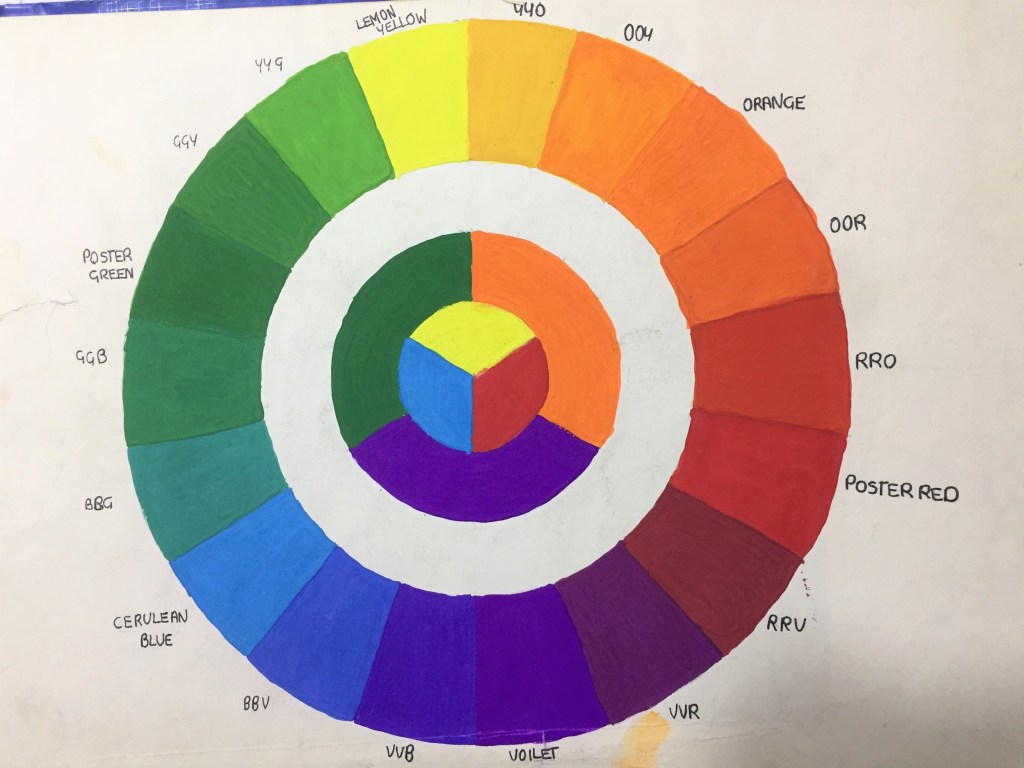
A colour wheel is an abstract illustrative organisation of colour hues. We make a colour wheel to theoretically build relationships between colours.
PRIMARY, SECONDARY, TERTIARY, QUATERNARY COLOURS.
- PRIMARY : yellow, red and blue cannot be recreated by mixing other colours together. They are primary colours
- SECONDARY : A colour resulting from the mixing of two primary colours is a secondary colour.(orange, green, violet).
- TERTIARY : Tertiary colors come about when we mix a primary and a secondary color.
COLOUR SCHEMES : It is a plan or arrangement of colours.
- complementary colour scheme -The complementary color scheme is made of two colors that are opposite each other on the color wheel.(TOTAL 3 SCHEMES: Y-V,B-O,R-G)
- split complementary colour scheme – A split-complementary color scheme combines one base color with the two colors directly adjacent to its opposite or complementary color.(TOTAL 6 SCHEMES : Y-VVR-VVB,V-YYG-YYO,G-RRV-RRO,O-BBG-BBV,R-GGB-GGY,B-OOY-OOR)
- double complementary colour scheme – Double complementary color schemes are created by using colors that are next to each other and then finding their opposites on the color wheel.
- double split complementary colour schemes – Double-split complementary colors are the four colors on either side of a pair of complementary colors on the color wheel.(TOTAL 3 SCHEMES :YYG,YYO-VVR,VVB;OOY,OOR-BBG,BBV;RRO,RRV-GGB,GGY)
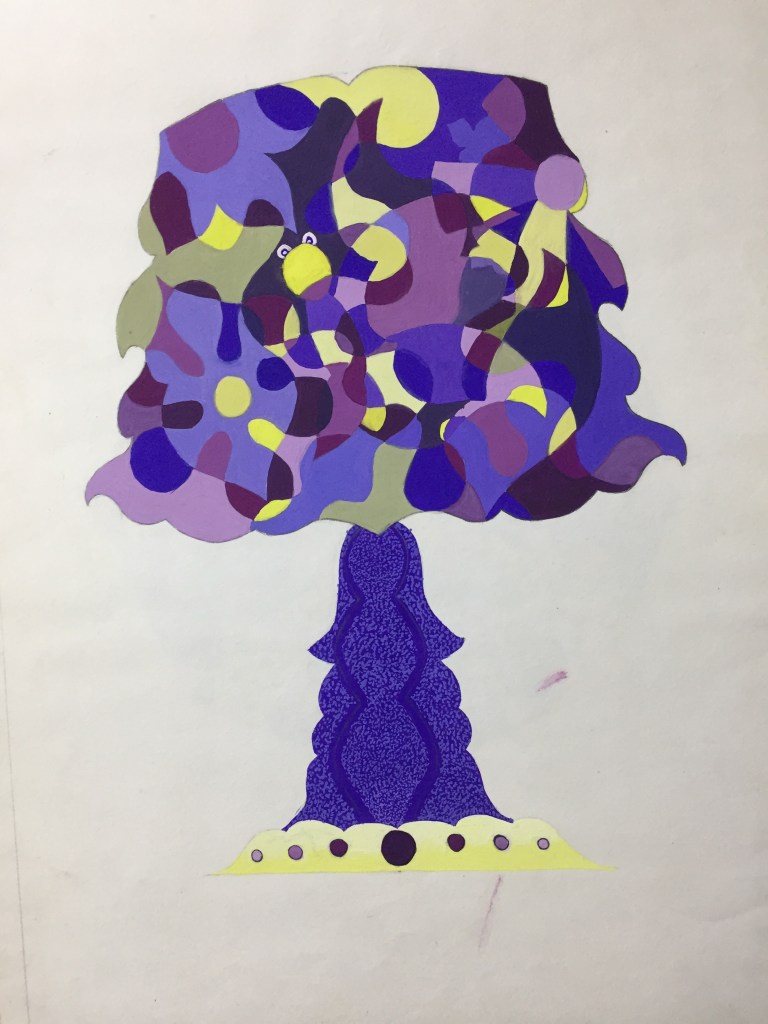
SINGLE SPLIT COMPLEMENTARY(YELLOW{Y}-VVR-ULTRAMARINE BLUE{VVB}) 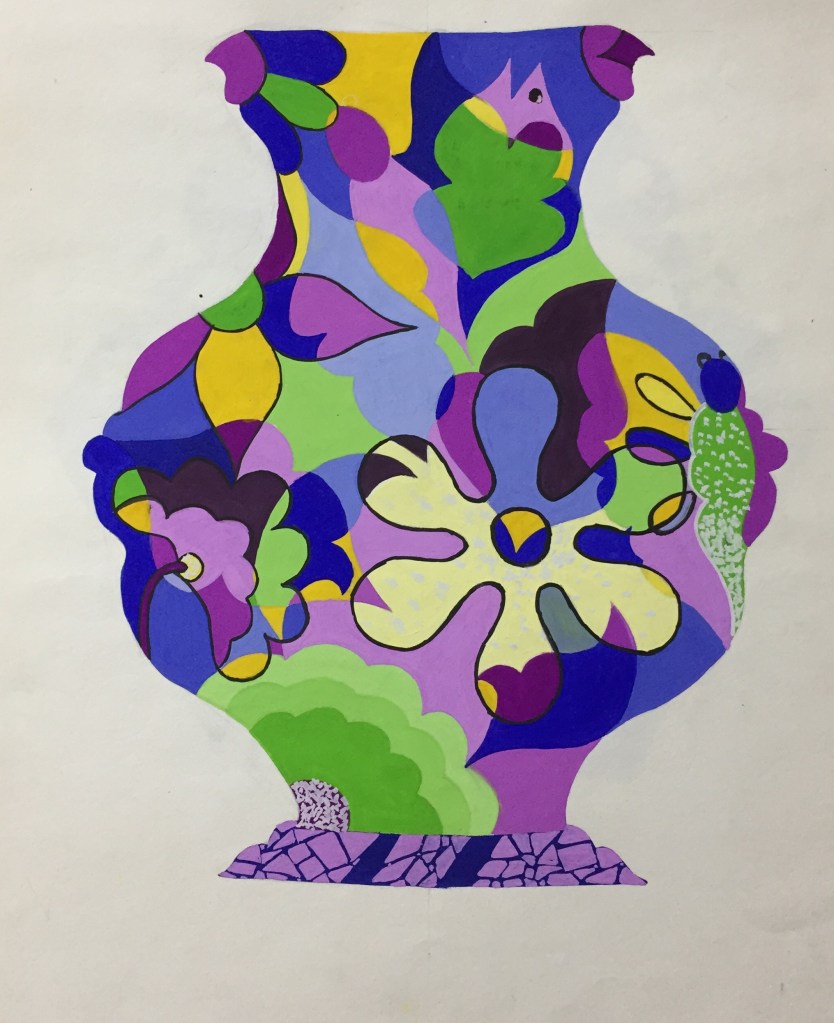
DOUBLE SPLIT COMPLEMENTARY(YYG-YYO-VVB-VVR) 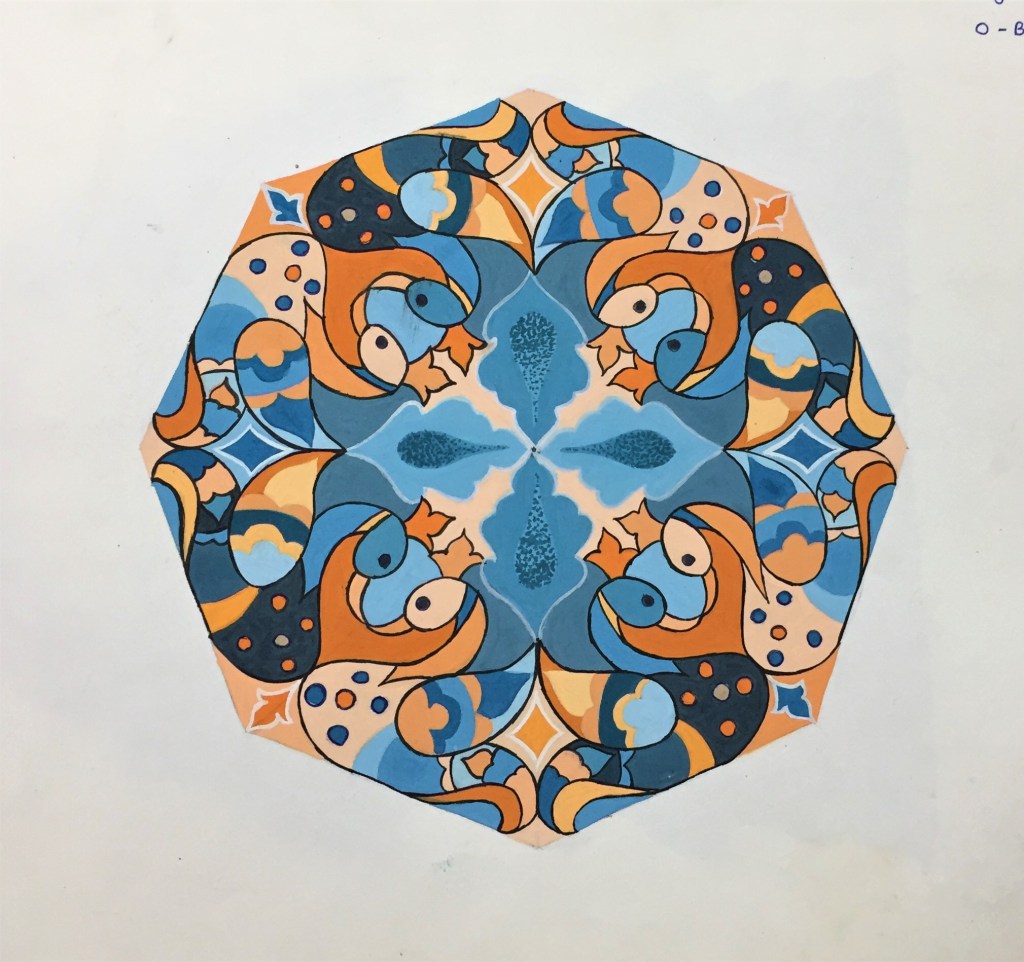
SINGLE SPLIT COMPLEMENTARY(O-BBG{TURQUOISE BLUE}-BBV) 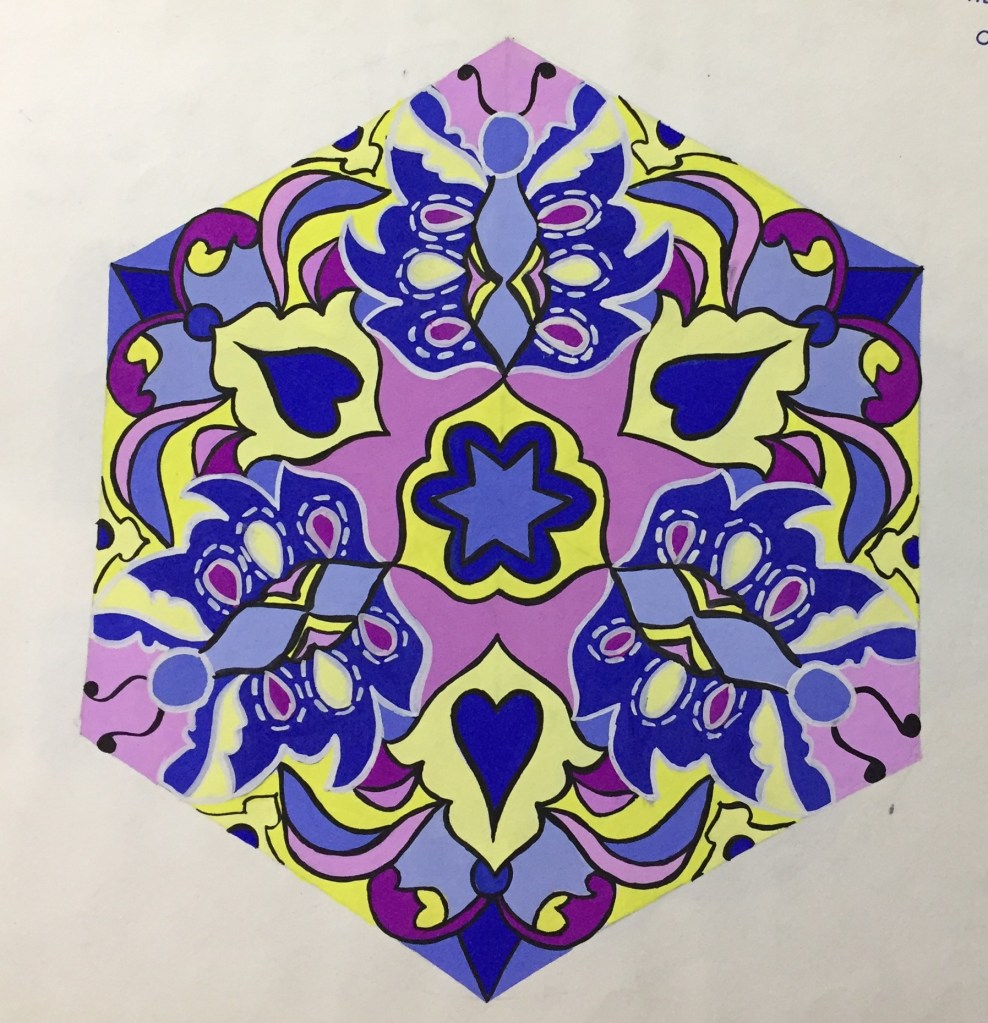
SINGLE SPLIT COMPLEMENTARY(YELLOW{Y}-VVR-ULTRAMARINE BLUE{VVB}) 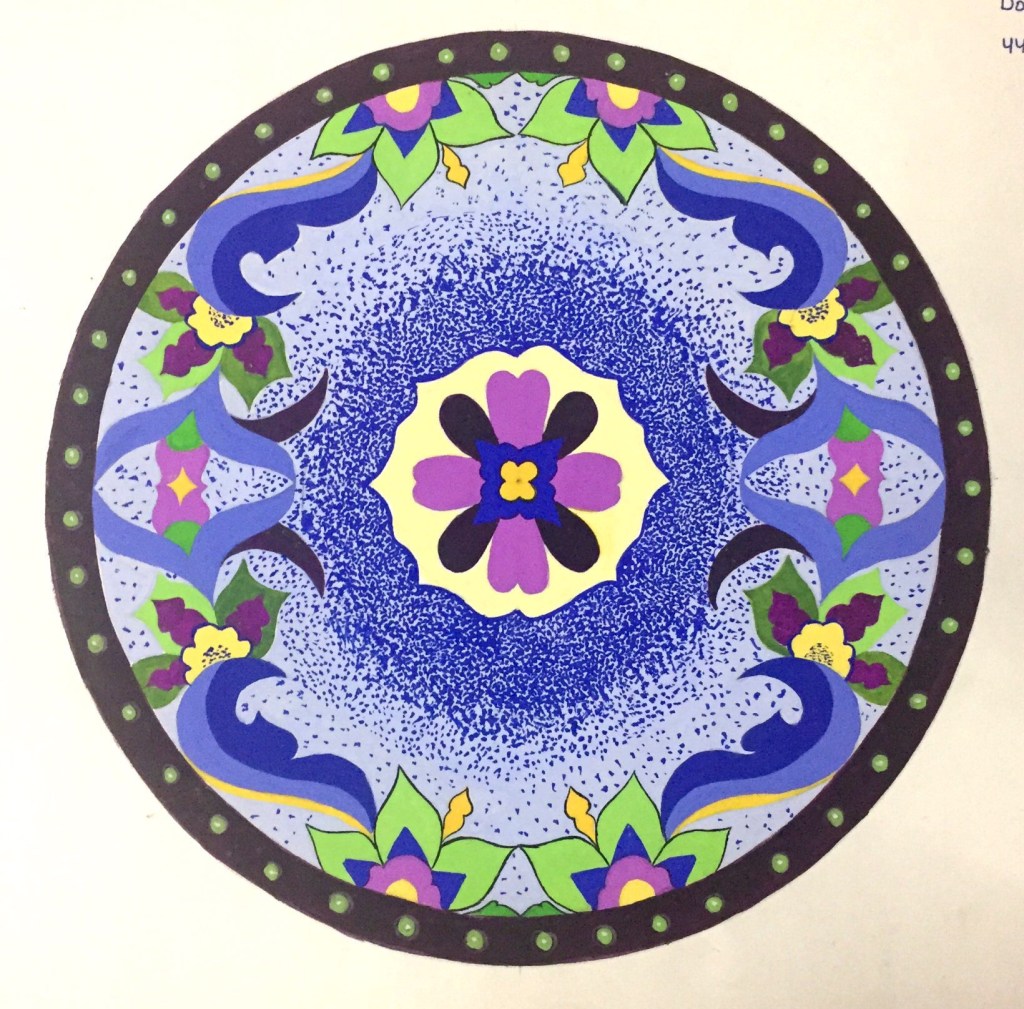
DOUBLE SPLIT COMPLEMENTARY(YYG-YYO-VVB-VVR) 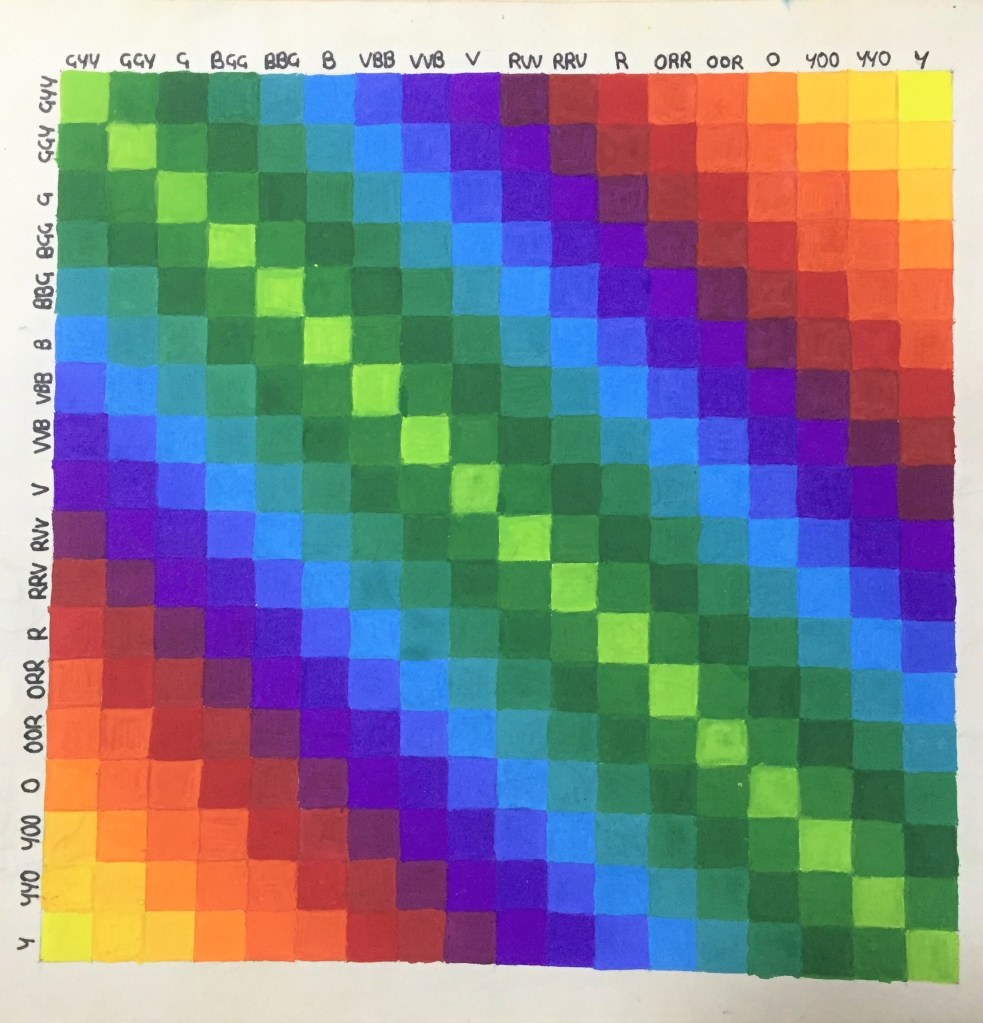

 AYUSHI JAIN